Physics
Paper Helicopter
Make a helicopter from a strip of paper and watch it spin as it falls. Then add weight and compare how it descends.
- 01
Prepare
4 materials and a question to think about first.
- 02
Try
6 steps on a single screen, to follow as you go.
- 03
Understand
What happened and why, for the child and for the adult.
You'll need
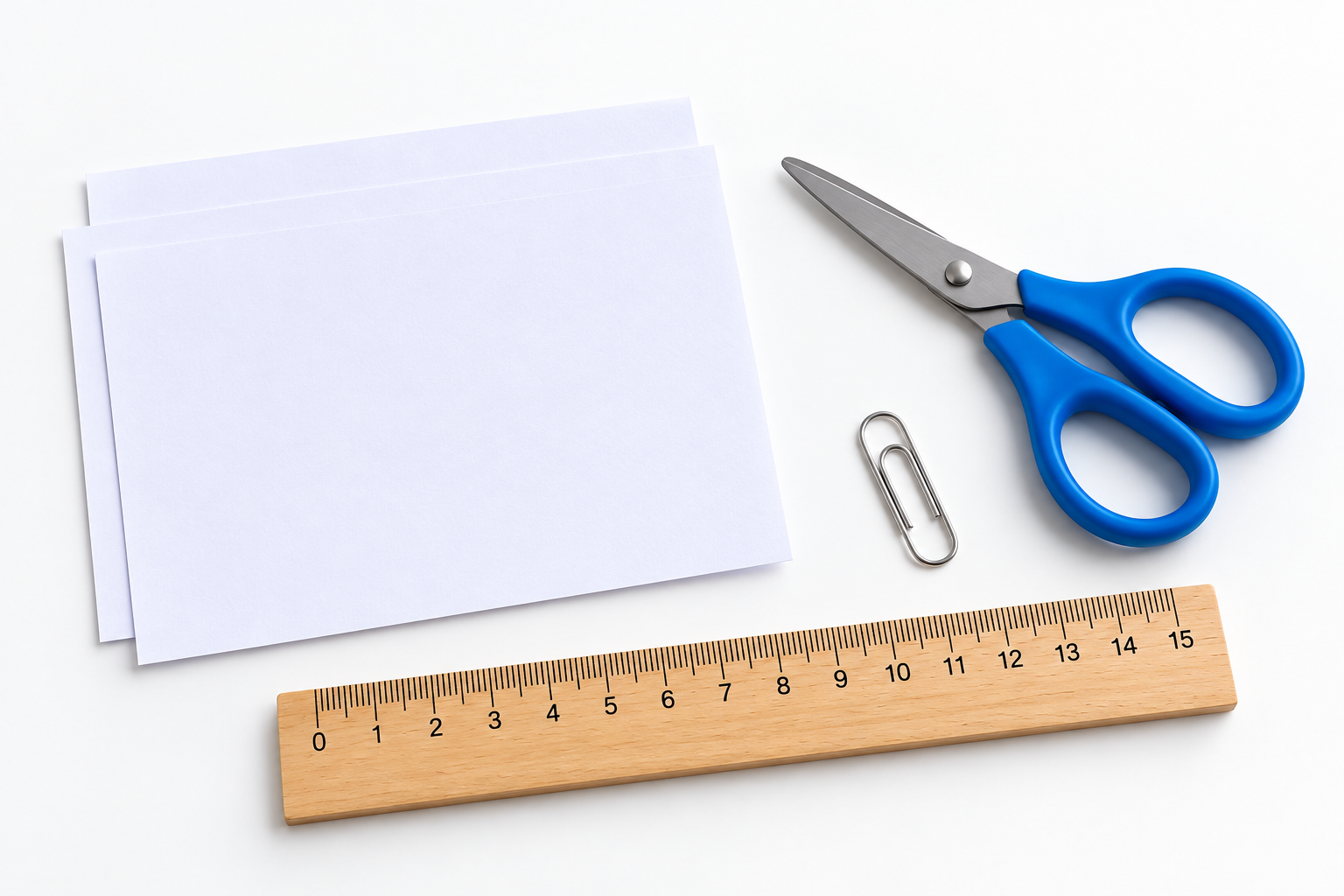
One sheet of regular paper · Scissors · Ruler and pencil · Two matching metal paper clips
Is Aporeva useful to you?
Aporeva is a free and independent project. If you want, you can help cover its basic running costs.
Help keep Aporeva running →Aporeva started with a question
I started this project while looking for interesting things to do with my daughter and ways to nurture her curiosity about how the world works.
Discover the story behind Aporeva →If you liked this one…
Same topic · Mechanics
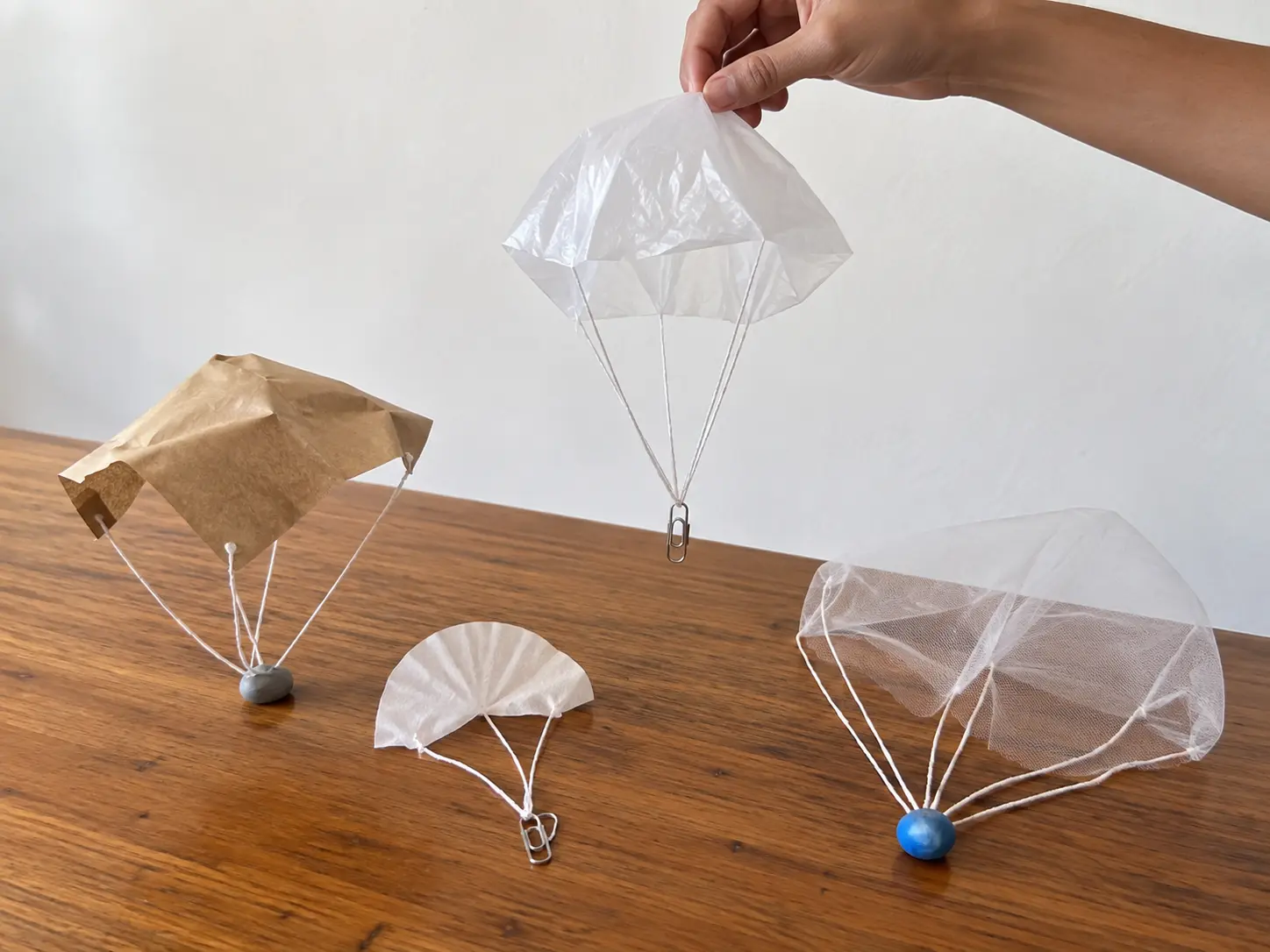
Design the Best Parachute
Build parachutes with different canopy sizes and time their descent while keeping the rest of the setup the same.
- Time · Long
- Wow · Mild
- Mess · None
Same topic · Mechanics
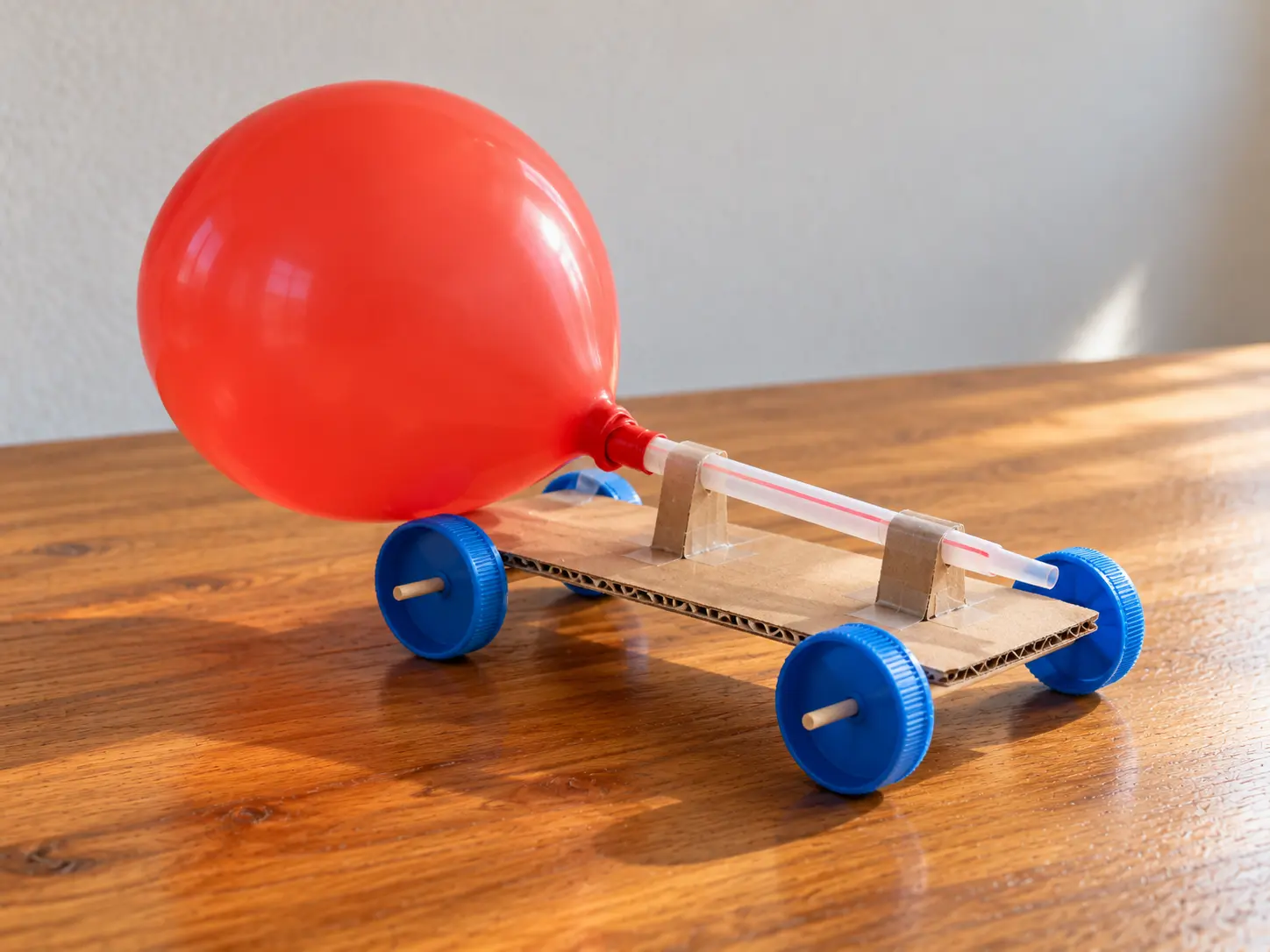
Balloon-Powered Car
Build a cardboard car with freely spinning axles and propel it using air from a balloon.
- Time · Long
- Wow · Surprising
- Mess · None
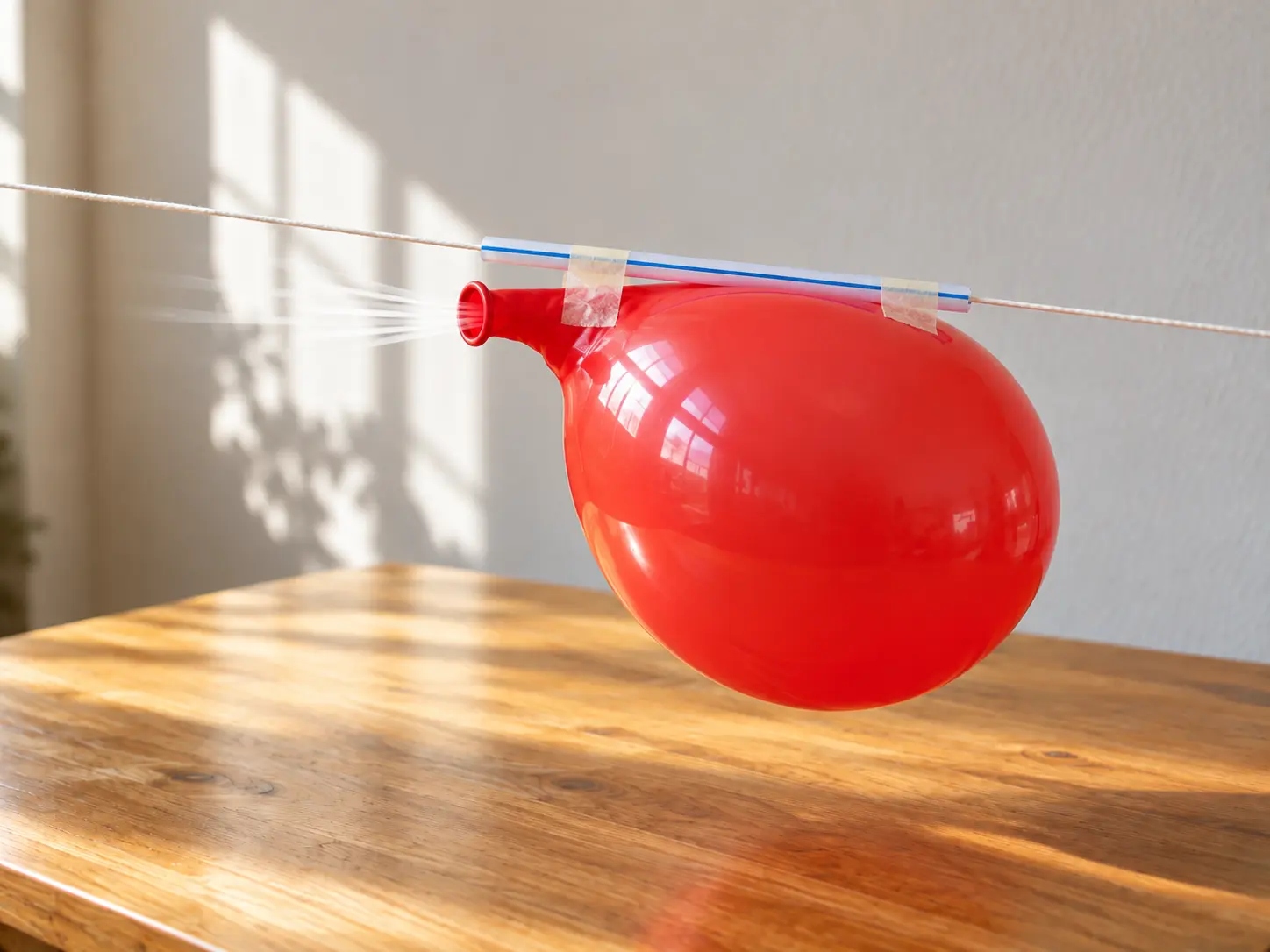
Same topic · Mechanics
Balloon Rocket
A balloon taped to a straw slides along a string as it releases air in the opposite direction.
- Time · Medium
- Wow · Mild
- Mess · None
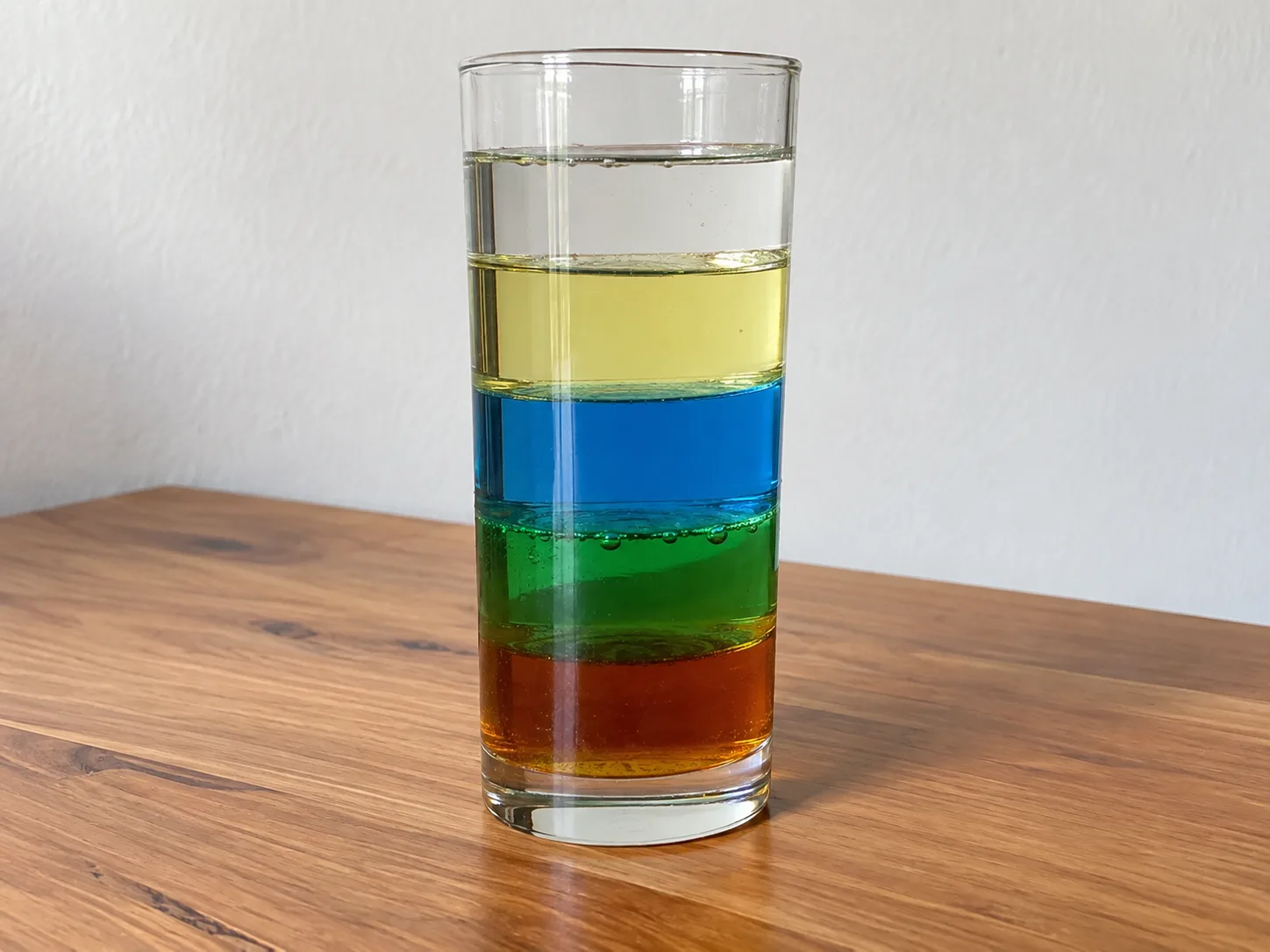
Another area · Chemistry
Liquid Density Tower
Carefully stack liquids of different densities and watch them form layers that may slowly mix over time.
- Time · Medium
- Wow · Surprising
- Mess · A little
01Prepare
What we need and what we think will happen.
Materials

Preparation
- •Find an indoor spot without drafts, with enough clear space to drop your helicopter from a raised hand.
🔮 Before you start
What do you think the paper will do when you let go?
What might change if you add another paper clip?
Ask them and listen to the answer. It doesn't matter if they guess right.
02Try
Hands on.
- 01Step 1.
Cut the paper
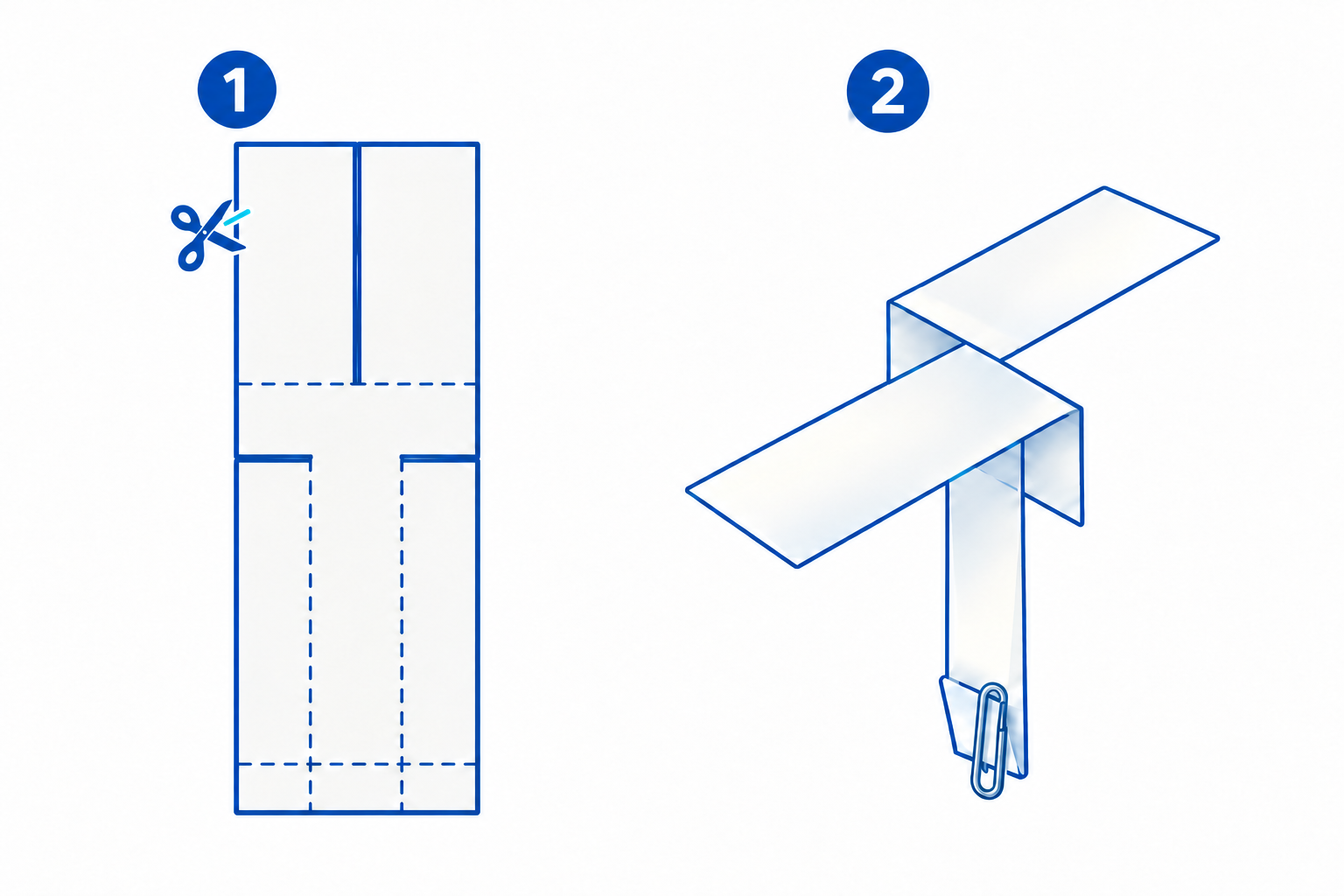
Draw a rectangle 2 in (5 cm) wide and 7 in (18 cm) long. Have an adult cut it out.
- 02Step 2.
Make the blades
Find the middle of one short end. Starting there, have an adult cut a straight 3 in (8 cm) slit down the center, making two equal strips at the top.
- 03Step 3.
Fold the body
Just below the blades, have an adult cut a 3/8 in (1 cm) slit inward from each long edge of the body. Fold both side tabs inward 3/8 in (1 cm), then fold the bottom 3/8 in (1 cm) upward. Secure the bottom with one centered paper clip.
- 04Step 4.
Open the blades
At the end of the 3 in (8 cm) slit, crease the base of each blade. Fold one toward you and the other away from you until they are nearly horizontal and point in opposite directions.
- 05Step 5.
Drop it
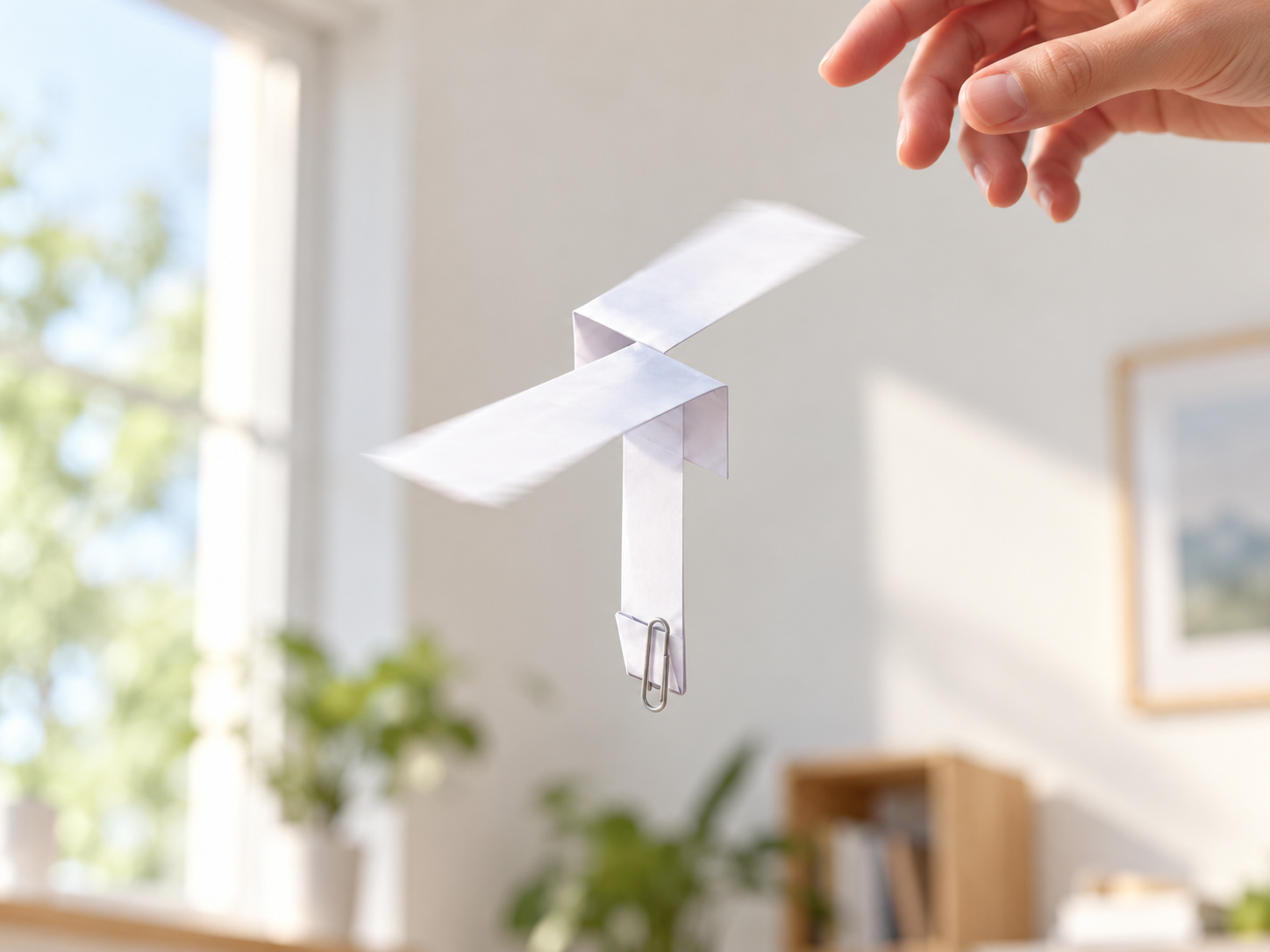
Hold the body with the paper clip at the bottom and the blades at the top. Raise your arm and let go without throwing. Watch it spin, then repeat two or three times from the same height.
- 06Step 6.
Add weight
Attach the second paper clip next to the first at the bottom. Drop the same helicopter two or three times from the same height and compare how it falls.

03Understand
What happened and why.
What happened
The helicopter may begin to spin as it falls. Its blades interact with the air, slowing the descent. Adding a second paper clip often makes it fall faster, though the result depends on the folds and drop height.
👧 To explain it to a child
Gravity pulls your helicopter down. As it falls, air pushes on the blades you folded, making it spin. The air also helps slow the fall. Adding another paper clip makes it heavier, so it may fall faster.
🧑 For the adult: what's going on?
Gravity causes the model to descend through the air. The opposite folds of its blades create aerodynamic forces that produce torque and encourage autorotation.
What you learn
- •Blade shape and orientation affect motion during a fall.
- •Air can make an object rotate and slow its descent.
- •Changing the weight lets us compare two trials of the same design.
💭 To talk about
- —When did the helicopter start spinning?
- —What changed when you added the second clip?
- —What might happen if you folded the blades in the opposite directions?
🧪 Let's try something else
Does it fall faster with two clips?
Try three drops with one clip and three with two, always from the same place. Compare the descents.
One clip · Two clips
- We change
- The number of paper clips at the bottom.
- We keep the same
- The same helicopter, blade folds, location, drop height, and release method.
- We observe
- Whether it spins in both trials and which version takes longer to hit the floor.
Variations
Try a challenge
Spin the other way. Fold each blade in the opposite direction and drop it from the same height. See whether the spin reverses.
More scientific
Different blade length. Make another helicopter with the same overall dimensions but a shorter center slit. Use the same number of paper clips and compare the falls.
Get creative
Decorated blades. Draw small designs on the blades with colored pencils. Drop the helicopter and see how the drawings look as it spins.
Is Aporeva useful to you?
Aporeva is a free and independent project. If you want, you can help cover its basic running costs.
Help keep Aporeva running →Aporeva started with a question
I started this project while looking for interesting things to do with my daughter and ways to nurture her curiosity about how the world works.
Discover the story behind Aporeva →If you liked this one…

Same topic · Mechanics
Design the Best Parachute
Build parachutes with different canopy sizes and time their descent while keeping the rest of the setup the same.
- Time · Long
- Wow · Mild
- Mess · None

Same topic · Mechanics
Balloon-Powered Car
Build a cardboard car with freely spinning axles and propel it using air from a balloon.
- Time · Long
- Wow · Surprising
- Mess · None

Same topic · Mechanics
Balloon Rocket
A balloon taped to a straw slides along a string as it releases air in the opposite direction.
- Time · Medium
- Wow · Mild
- Mess · None

Another area · Chemistry
Liquid Density Tower
Carefully stack liquids of different densities and watch them form layers that may slowly mix over time.
- Time · Medium
- Wow · Surprising
- Mess · A little