Physics
Colored Shadows
Shine two colored flashlights on a wall and discover how to make red and blue shadows with your own hand.
- 01
Prepare
6 materials and a question to think about first.
- 02
Try
6 steps on a single screen, to follow as you go.
- 03
Understand
What happened and why, for the child and for the adult.
You'll need
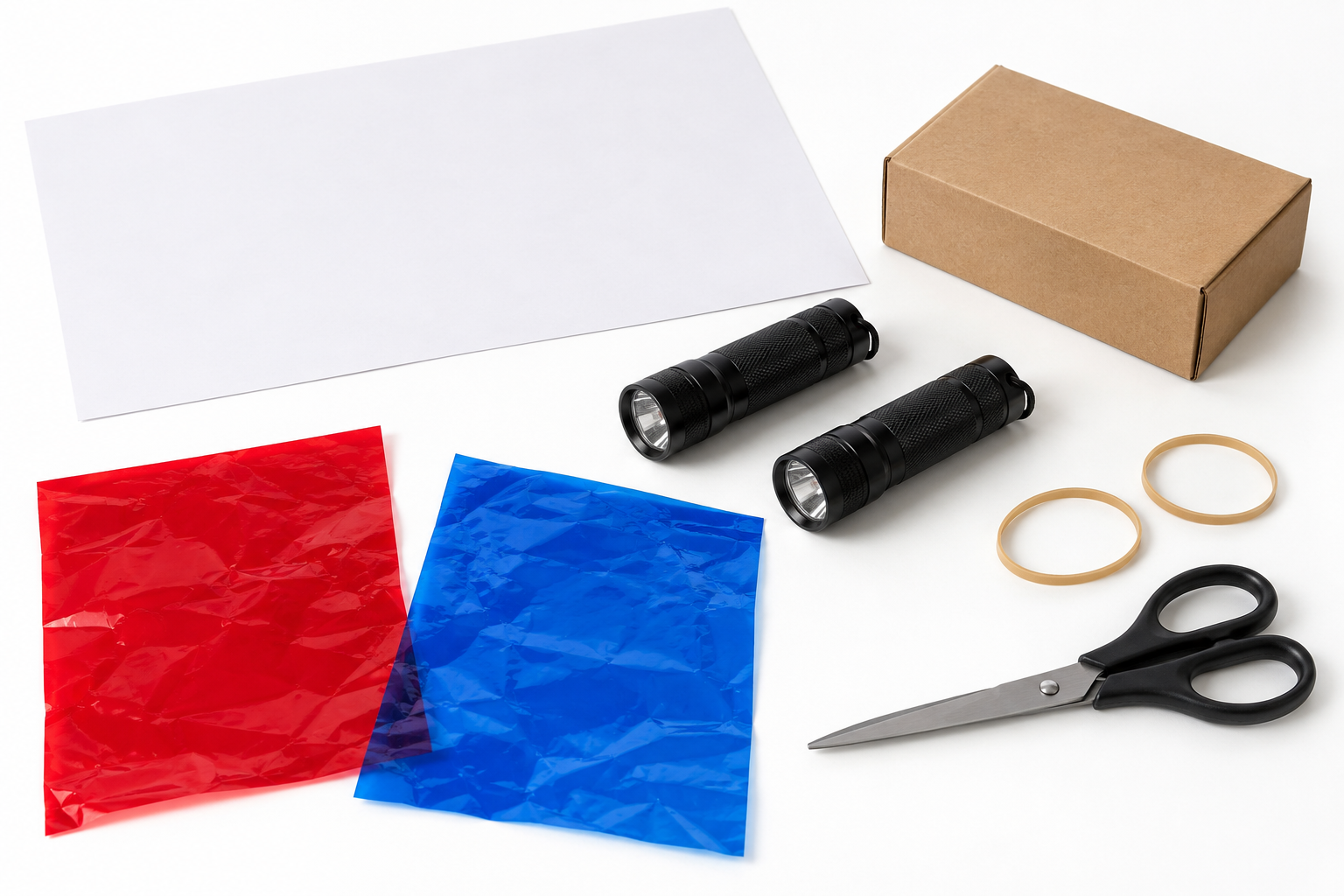
Two LED flashlights of similar brightness · Transparent red and blue cellophane · Two rubber bands or adhesive tape · A white wall or a large sheet of white paper · A box or book to support the flashlights · Scissors
Is Aporeva useful to you?
Aporeva is a free and independent project. If you want, you can help cover its basic running costs.
Help keep Aporeva running →Aporeva started with a question
I started this project while looking for interesting things to do with my daughter and ways to nurture her curiosity about how the world works.
Discover the story behind Aporeva →If you liked this one…
Same topic · Optics
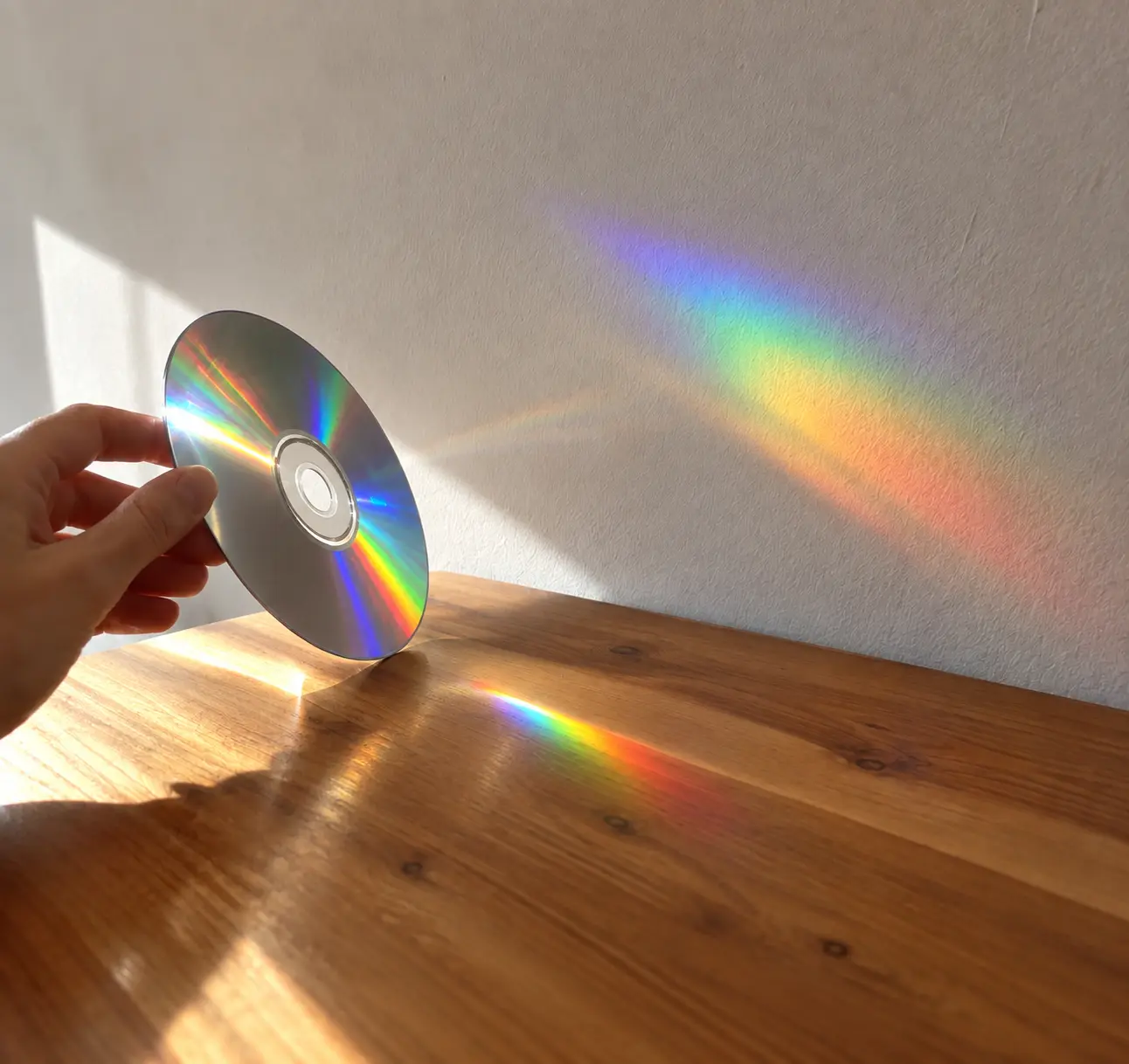
Make a Rainbow with a CD
The tiny grooves on a CD separate white light into colors you can see on the disc—and sometimes project onto a wall.
- Time · Short
- Wow · Surprising
- Mess · None
Same topic · Optics
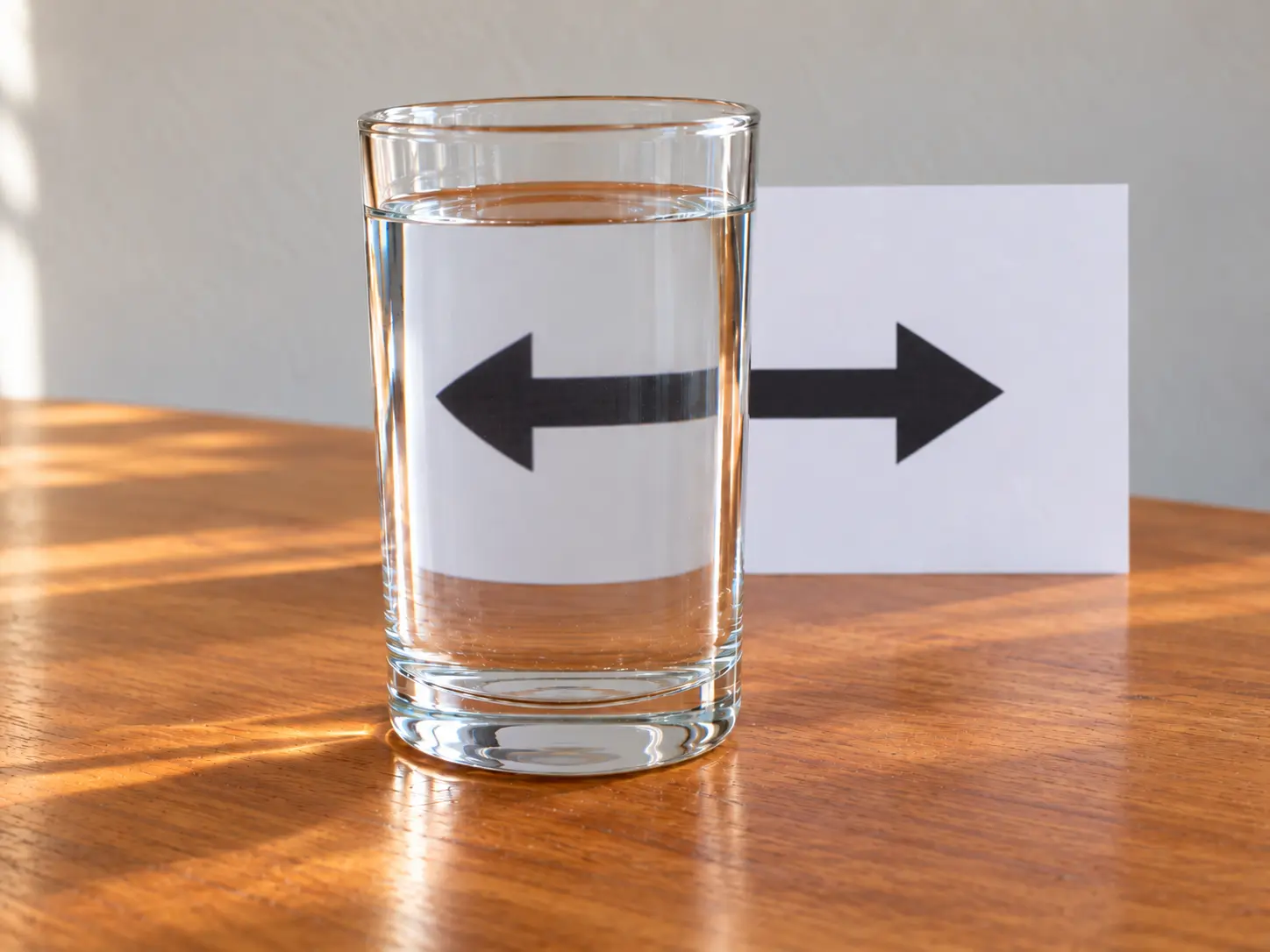
The Arrow That Reverses
An arrow behind a glass of water can seem to point the opposite way when you look through the curved glass.
- Time · Short
- Wow · Surprising
- Mess · A little
Same topic · Optics
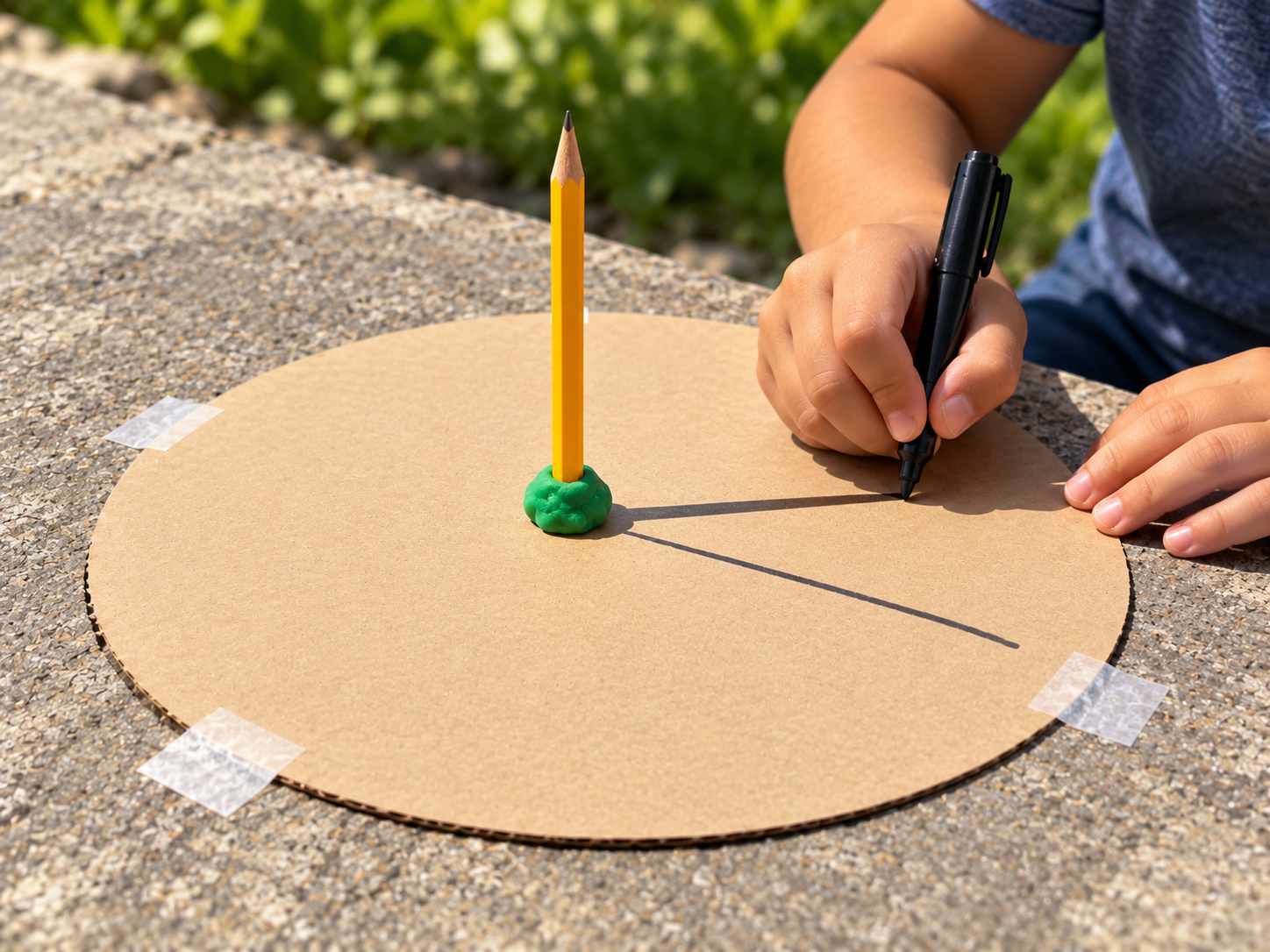
Homemade Sundial
Build a clock with a pencil and watch its shadow change direction throughout the day. Use it to guess the time!
- Time · Short
- Wow · Surprising
- Mess · None
Another area · Chemistry
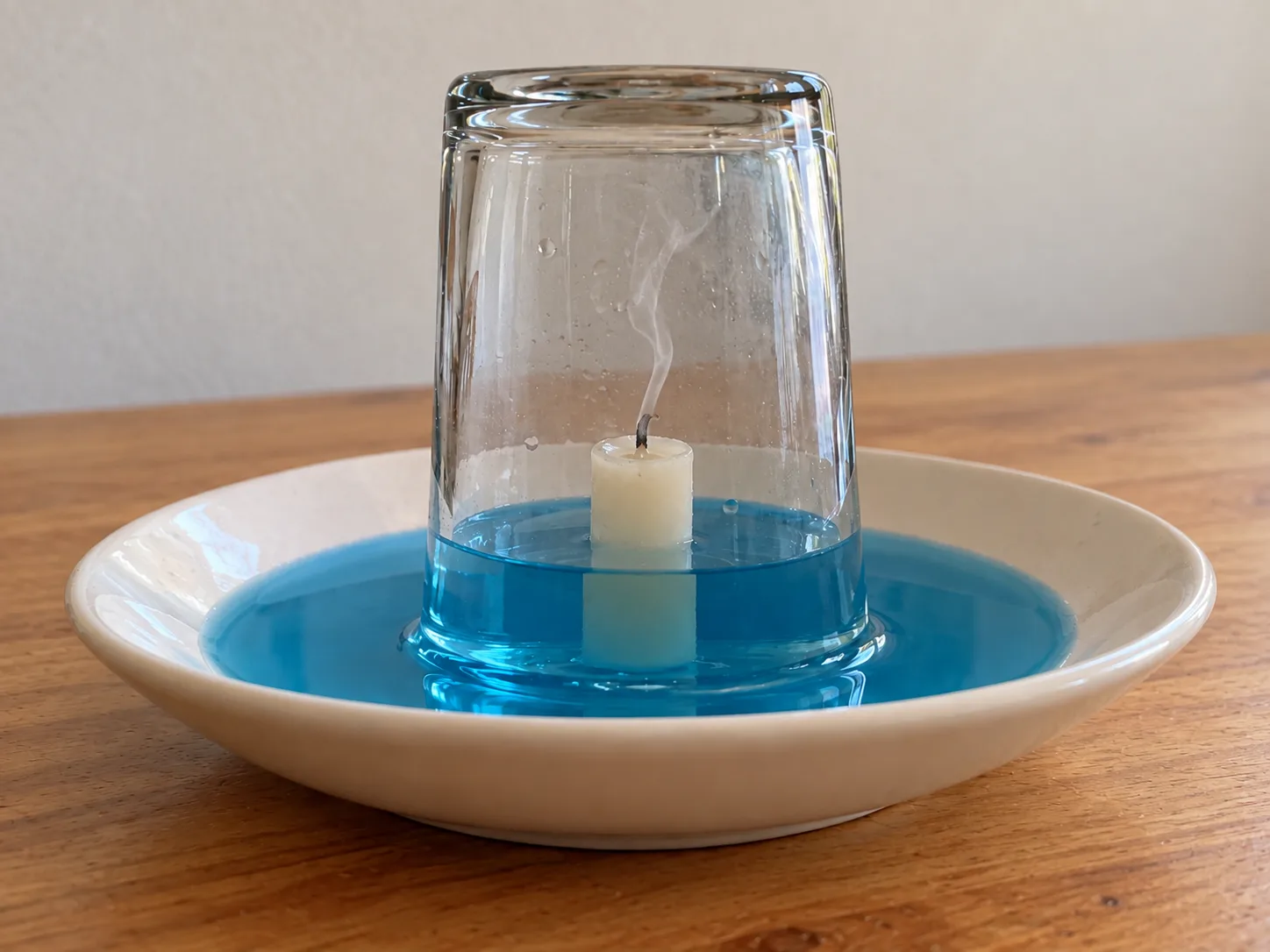
The Candle That Makes Water Rise
When you cover a burning candle with a glass, water moves inside as the pressure in the glass drops.
- Time · Short
- Wow · Very surprising
- Mess · A little
01Prepare
What we need and what we think will happen.
Materials

Preparation
- •Choose a room you can darken. Ambient light makes the colors and shadows harder to see.
- •Use cellophane that lets light through; opaque material won't produce a colored beam.
🔮 Before you start
What color do you think you'll see when red and blue light overlap?
Do you think two flashlights will make one shadow or more than one?
Ask them and listen to the answer. It doesn't matter if they guess right.
02Try
Hands on.
- 01Step 1.
Make two colored lights
With an adult's help, cut the red and blue cellophane. Cover the front of one flashlight with about three layers of red cellophane and the other with three layers of blue. Secure them with rubber bands or tape.
- 02Step 2.
Light up the wall
Rest the flashlights on a box, about 4–8 inches (10–20 cm) apart and 20–40 inches (50–100 cm) from a white wall. Darken the room and turn both lights on.
- 03Step 3.
Mix the colors
Aim the flashlights so their two patches of light overlap on the wall. Look at the color where the lights mix.
If this step doesn't work
- →If the colors are hard to see, remove one layer of cellophane or move the flashlights closer to the wall.
- 04Step 4.
Make colored shadows
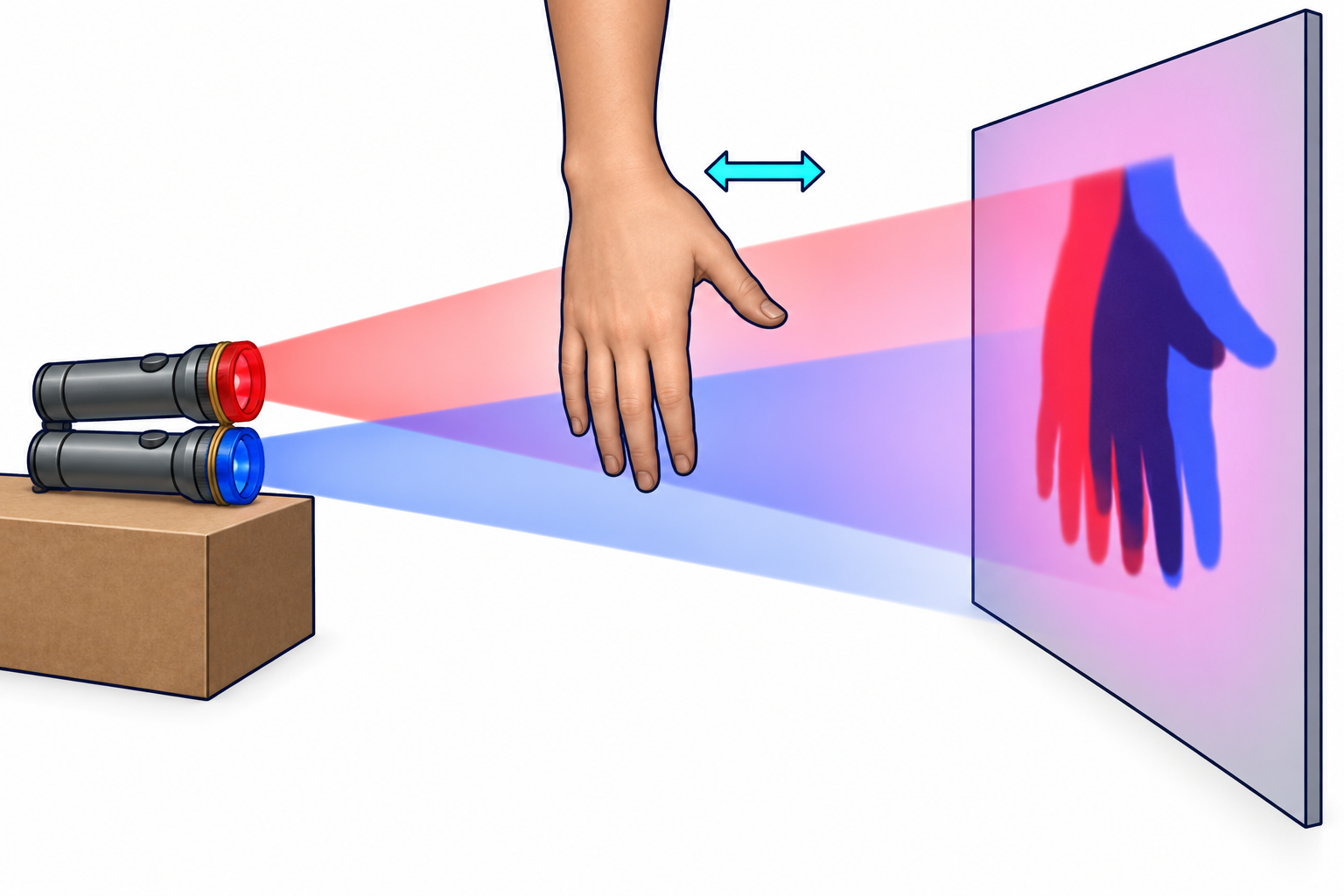
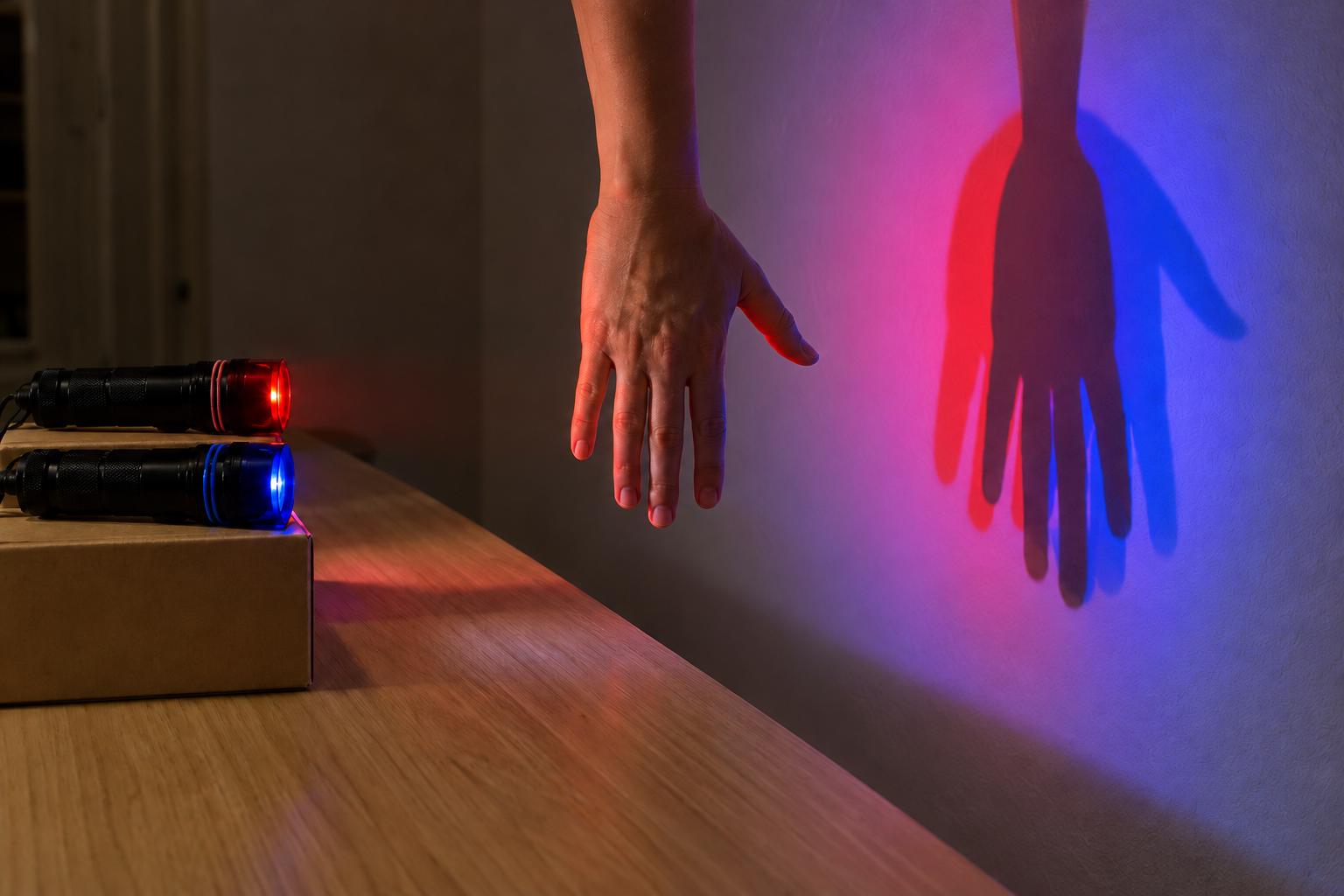
Hold your open hand between the flashlights and the wall, about 8–12 inches (20–30 cm) from the wall. Look for two shadows, one red and one blue, in the area lit by both flashlights.
If this step doesn't work
- →If you only see one dark shadow, move the flashlights a little farther apart and adjust your hand until you can see both outlines.
- 05Step 5.
Make the shadows dance
Move your hand from side to side, then closer to and farther from the wall. Watch how the two shadows change position and size.
- 06Step 6.
Turn off one flashlight
Turn off one flashlight, then switch and turn off the other. Compare what happens to the shadows and the wall's color when only one light is on.

03Understand
What happened and why.
What happened
Where the red and blue light overlap, the wall may look pink or magenta. Your hand blocks each light in a different place, creating two colored shadows: one area remains lit blue and the other remains lit red. With just one flashlight, the shadow is dark.
👧 To explain it to a child
Red light and blue light reach the wall together, so their colors mix. When you put your hand in the way, you block some of each light. One spot still gets blue light, and another still gets red light. That's how you make two colorful shadows!
🧑 For the adult: what's going on?
Light from each flashlight travels approximately in straight lines to the wall. The filters transmit different parts of each flashlight's spectrum, creating beams of different colors.
What you learn
- •Different colors of light can mix when they shine on the same area.
- •An opaque object blocks light traveling along a path and creates a shadow.
- •Multiple light sources make multiple shadows, and each shadow's color depends on which light still reaches it.
💭 To talk about
- —Why aren't the two shadows the same color?
- —What changed when you moved your hand closer to the wall?
- —What happened when you turned off one of the lights?
🧪 Let's try something else
What changes when you move the flashlights apart?
Keep your hand still in front of the wall. Try moving the two flashlights closer together and then farther apart. Re-aim them so their beams still overlap.
Flashlights closer together · Flashlights farther apart
- We change
- The sideways distance between the two light sources.
- We keep the same
- Use the same wall, hand, filters, and approximate distances from the lights and hand to the wall.
- We observe
- Compare how far apart the two shadows appear and whether the dark area where they overlap changes.
Variations
Easier
Two colors on the wall. Start without putting your hand in the way. Move the red and blue patches of light together and apart to explore where a new color appears.
Another challenge
Shadows with objects. Try using a pencil or another small opaque object instead of your hand. Compare the shapes of the two shadows.
More scientific
Add a third light. If you have another flashlight and green cellophane, overlap that light too. Try to get closer to white and look for new shadow colors. The result depends on how bright each flashlight is.
Is Aporeva useful to you?
Aporeva is a free and independent project. If you want, you can help cover its basic running costs.
Help keep Aporeva running →Aporeva started with a question
I started this project while looking for interesting things to do with my daughter and ways to nurture her curiosity about how the world works.
Discover the story behind Aporeva →If you liked this one…

Same topic · Optics
Make a Rainbow with a CD
The tiny grooves on a CD separate white light into colors you can see on the disc—and sometimes project onto a wall.
- Time · Short
- Wow · Surprising
- Mess · None

Same topic · Optics
The Arrow That Reverses
An arrow behind a glass of water can seem to point the opposite way when you look through the curved glass.
- Time · Short
- Wow · Surprising
- Mess · A little

Same topic · Optics
Homemade Sundial
Build a clock with a pencil and watch its shadow change direction throughout the day. Use it to guess the time!
- Time · Short
- Wow · Surprising
- Mess · None

Another area · Chemistry
The Candle That Makes Water Rise
When you cover a burning candle with a glass, water moves inside as the pressure in the glass drops.
- Time · Short
- Wow · Very surprising
- Mess · A little